- WordPress
-
WordPress
-
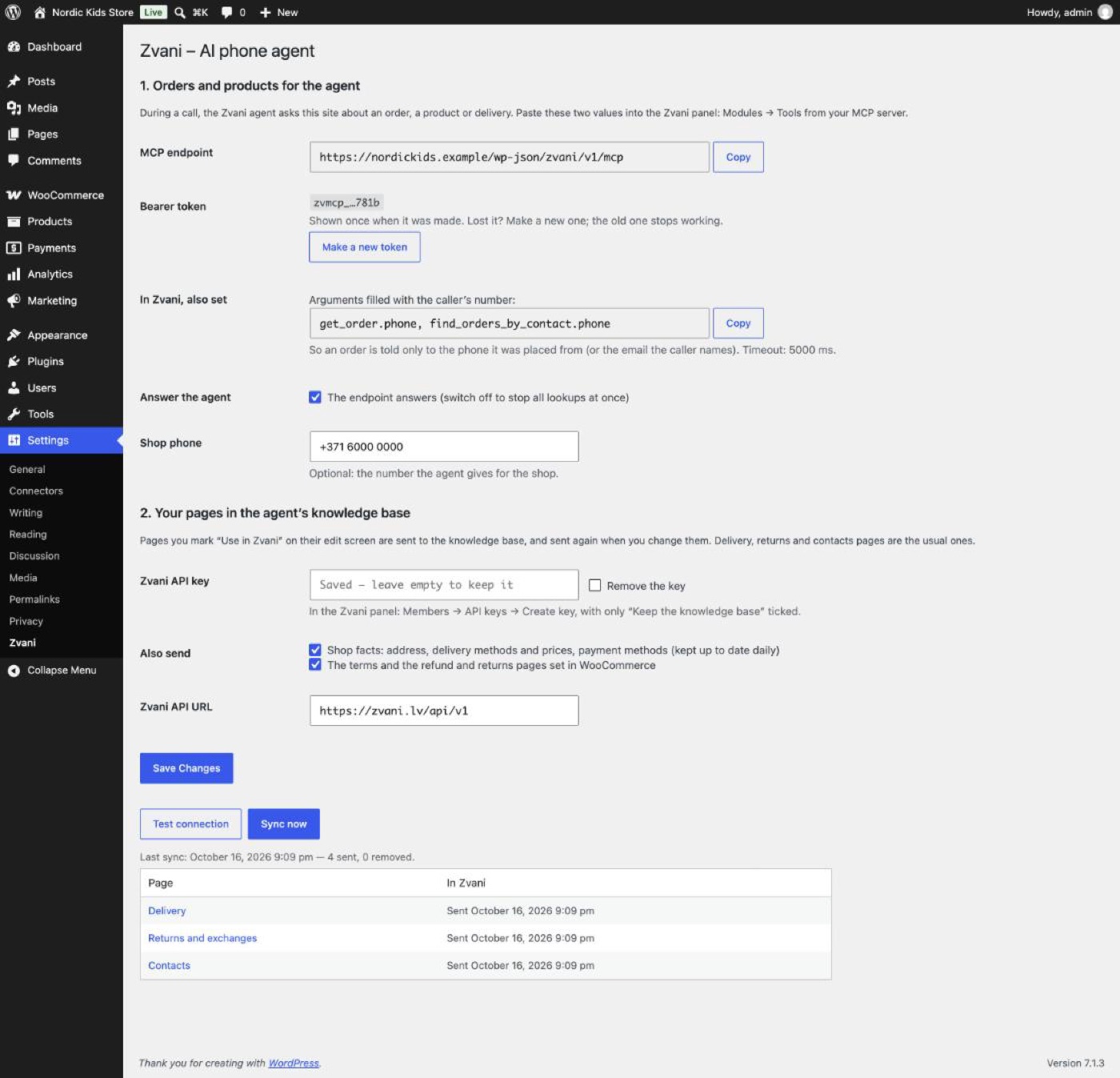
MCP endpoint https://your-shop.example/wp-json/zvani/v1/mcpBearer token get_order.phone, find_orders_by_contact.phone5000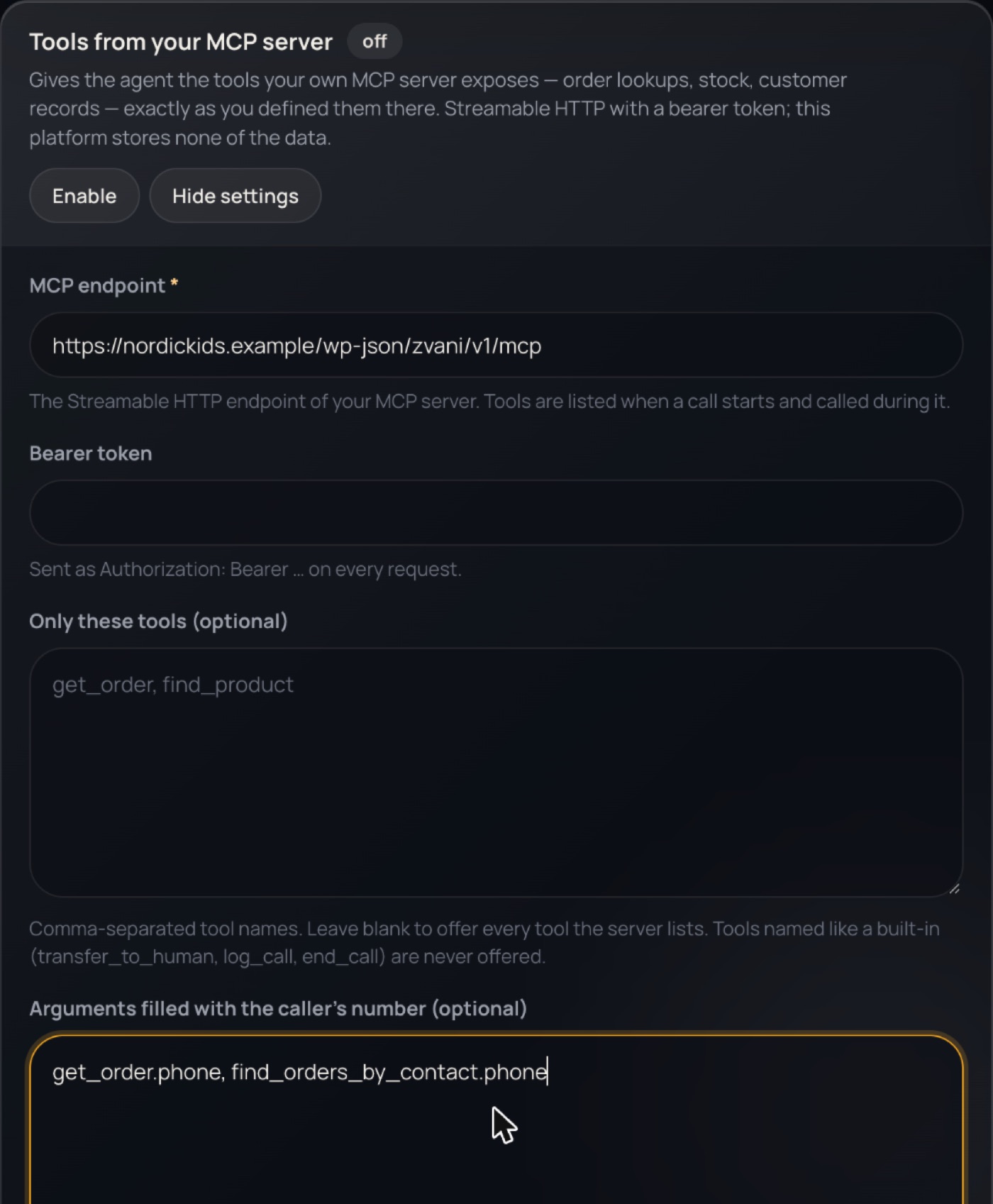
get_order :: Say the status in plain words, and the delivery method and tracking only if asked. Never read out the tracking URL. If not found or not verified, ask them to check the number, or for the email the order was placed with. For anything you cannot do (change, cancel, return, complaint), take the order number and the problem and log the call for staff.
find_orders_by_contact :: Name the orders by date and amount, ask which one they mean, then call get_order with its number.
find_products :: Name the product shortened to brand and model, the price and whether it is in stock; never a price or stock the answer does not give. If several match, name at most three and ask which.
get_product :: Answer only what was asked (a colour, a size, whether that option is in stock).
shop_info :: Give only the part asked for.
-
-
WordPress
get_order | order_number, phone*, email | ||
find_orders_by_contact | phone*, email | ||
find_products | query, limit | ||
get_product | id / sku | ||
shop_info | — |
-
_order_numberzvani_order_by_number. -
zvani_order_tracking.
.htaccess
SetEnvIf Authorization "(.*)" HTTP_AUTHORIZATION=$1